Liver Cancer Fusion Predictor at a Glance

Live Data Feed

Sample Type

Serum

Blood-based molecular testing

Cell-free fusion transcripts

CLINICAL VALIDATION

95.0%

Overall Accuracy

94.2% Sensitivity · 95.0% Specificity

BIOMARKER APPROACH

MULTIPLE

Cancer-Associated Fusion Transcripts

Computational Classification Model

SAMPLE COLLECTION

AT HOME

Blood Collection Available

Contracted Phlebotomy Partners

The Earlier We Find It, The Better We Fight It.

Our blood test detects molecular signals associated with hepatocellular carcinoma, including early-stage disease. No hospital visit required. Results typically available within 24 hours after the laboratory receives the sample.

The Problem

Liver Cancer Is Often Detected Too Late

Liver cancer can develop without noticeable symptoms, and many patients are diagnosed only after the disease has progressed. For people at increased risk, effective surveillance and earlier detection are especially important.

MoleculeDx Inc

HIGHER TUMOR BURDEN
13.1%
5-year overall survival after resection

Source: Tsilimigras DI, et al. Ann Surg. Overall Tumor Burden Dictates Outcomes for Patients Undergoing Resection of Multinodular Hepatocellular Carcinoma Beyond the Milan Criteria. DOI: 10.1097/SLA.0000000000004346.
MoleculeDx Inc

LOWER TUMOR BURDEN
73.7%
5-year overall survival after resection

Source: Tsilimigras DI, et al. Ann Surg. Overall Tumor Burden Dictates Outcomes for Patients Undergoing Resection of Multinodular Hepatocellular Carcinoma Beyond the Milan Criteria. DOI: 10.1097/SLA.0000000000004346.

MoleculeDx Inc

RECOMMENDED SURVEILLANCE

<10%

of at-risk patients received biannual ultrasound surveillance in a recent meta-analysis.

Source: Meta-Analysis: Utilisation of Hepatocellular Carcinoma Surveillance. Aliment Pharmacol Ther. DOI: 10.1111/apt.70403. PMID: 41077883.

SURVEILLANCE CHANGES TREATMENT OPPORTUNITY
58% vs 34%

In a meta-analysis of 145,396 patients with HCC, 58.2% of surveillance-detected patients received potentially curative treatment, compared with 34.0% of patients diagnosed outside surveillance.

Source: Singal AG, et al. J Hepatol. 2022;77:128–139. DOI: 10.1016/j.jhep.2022.01.023.

People at increased risk for HCC may be advised to undergo regular surveillance. However, adherence to recommended surveillance remains incomplete, and ultrasound performance can be limited in some patients. These challenges highlight the need for additional effective and accessible approaches to early detection.

A Solvable Gap, Not an Inevitable Outcome

Among patients whose HCC was not detected through surveillance, 65.4% were already beyond Milan criteria at diagnosis. In contrast, 64.6% of surveillance-detected HCCs were still within Milan criteria. Earlier detection can preserve opportunities for potentially curative treatment.

Source: Jou JH, et al. Dig Dis Sci. 2010;55:3591–3596. DOI: 10.1007/s10620-010-1366-3.

FUSING SCIENCE WITH EARLY DETECTION

Most Liver Cancers Are Found Too Late. We Want To Change That.

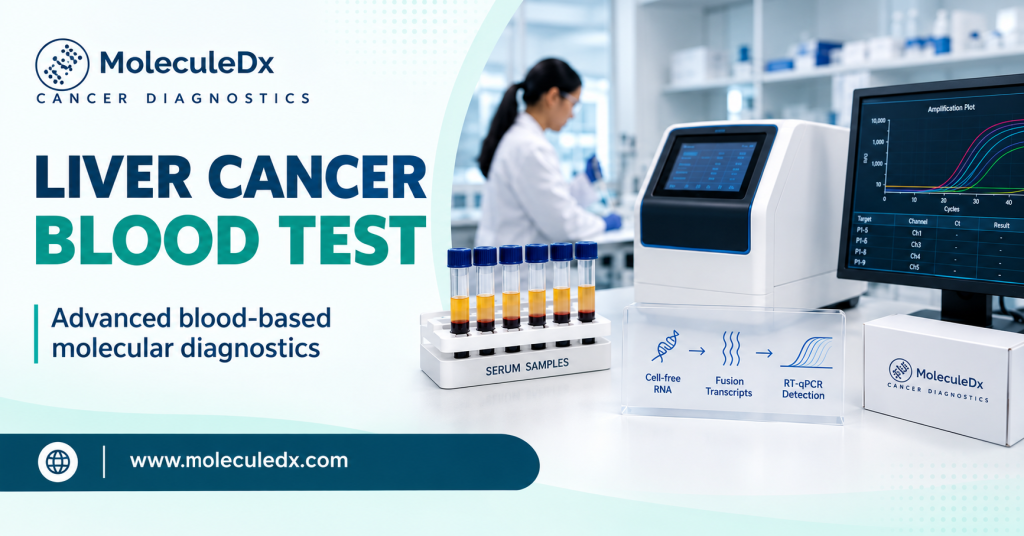
Today, liver cancer screening can fit more easily into a patient’s life. The MoleculeDx Fusion-detect™ blood test detects fusion transcript signals characteristic of hepatocellular carcinoma (HCC) from a blood sample. Earlier detection matters because patients with lower tumor burden have substantially greater opportunities for potentially curative treatment. At-home blood collection is available through contracted phlebotomy partners, making testing more accessible for people at increased risk.

The Liver Cancer Crisis in America

53%
of HCC cases were diagnosed beyond early-stage BCLC 0/A

Source: Singal AG, et al. Clin Gastroenterol Hepatol. U.S. multicenter VA cohort.

42,340
new U.S. liver cancer cases estimated in 2026

Source: American Cancer Society, Cancer Facts & Figures 2026.

<25%
of patients with cirrhosis receive HCC surveillance as recommended

Source: Wolf E, et al. Hepatology. 2021;73:713–725. Systematic review and meta-analysis of 118,799 patients.

UPMC Collaboration: Liver Cancer Fusion Predictor testing is available for eligible patients through participating UPMC providers and designated collection locations.

How MoleculeDx Compares to Conventional Methods

A Simple Blood Test. No Imaging. No Biopsy.

Conventional evaluation for liver cancer often relies on imaging and, in selected cases, biopsy. The MoleculeDx Fusion-detect™ test begins with a simple blood sample, providing a convenient molecular approach to HCC screening. At-home blood collection is available through contracted phlebotomy partners, helping make screening more accessible for people at increased risk.

Liver cancer screening at home — certified phlebotomist collecting blood sample for MoleculeDx Fusion-detect HCC test

Traditional Methods

MoleculeDx Fusion-detect™

95%

Accuracy

Clinical Validation Performance

Performance shown reflects MoleculeDx clinical validation data. Test performance should be interpreted in the context of the study population and reference standard.

Clinical Performance

How We Compare

Clinical validation performance of the Liver Cancer Fusion Predictor across key diagnostic metrics.

Fusion-detect™ — Overall Accuracy

95.0%

Fusion-detect™ — Sensitivity

94.2%

Fusion-detect™ — Specificity

95%

What Happens After You Book

Four Simple Steps From Order to Result

The MoleculeDx process is designed to make blood-based liver cancer testing straightforward—from online ordering and sample collection through laboratory analysis and secure delivery of your report.

1

Book Online

Schedule your at-home blood draw in minutes at booking.moleculedx.com. Pick a time that works for you.

2

Phlebotomist Comes to You

A certified phlebotomy professional from Portamedic or Travalab visits your home to collect the required blood sample. The collection typically takes less than 10 minutes.

3

Fusion-detect™ Analysis

Your blood sample is analyzed for cancer-associated fusion transcripts, and the molecular signals are evaluated using the proprietary Liver Cancer Fusion Predictor.

4

Receive Your Report

Your laboratory report is delivered securely online. Results that warrant further evaluation should be discussed with an appropriate healthcare provider.

At Your Front Door

Certified phlebotomist at your scheduled time

At-Home Collection

Liver Cancer Testing From Home

MoleculeDx makes blood collection convenient by bringing qualified phlebotomy services to your home. Through our contracted partners, Portamedic and Travalab, patients can schedule blood collection without traveling to a hospital or laboratory.

MoleculeDx Inc

Book Online

Choose an available date and arrival window through our secure online booking system.

MoleculeDx Inc

Certified Phlebotomist Visits You

Our contracted partners, Portamedic and Travalab, provide in-home blood collection by qualified phlebotomy professionals. The blood draw typically takes less than 10 minutes.

MoleculeDx Inc

Specialized Sample Transport

Your sample is packaged and transported to the MoleculeDx laboratory according to validated specimen-handling procedures designed to preserve sample integrity.

MoleculeDx Inc

Secure Online Results

Your laboratory report is delivered securely online, typically within 24 hours after the laboratory receives an acceptable sample.

Our Technology

Powered by Fusion-detect™ Technology

Fusion-detect™ is MoleculeDx’s proprietary molecular detection and machine-learning platform. It detects cancer-associated fusion transcripts in serum and integrates these molecular signals using a machine-learning model to assess the presence of hepatocellular carcinoma.

Fusion-detect™ was developed from MoleculeDx research on cancer-associated fusion transcripts and has evolved through successive analytical and machine-learning models. The current Liver Cancer Fusion Predictor integrates multiple serum fusion-transcript signals to classify samples for the presence of hepatocellular carcinoma.

THE GLOBAL BURDEN OF LIVER CANCER

The Burden of Liver Cancer Remains High

Liver cancer is a major cause of cancer-related death worldwide. Hepatocellular carcinoma (HCC) is the most common type of primary liver cancer, and outcomes are strongly influenced by the stage at which the cancer is detected.

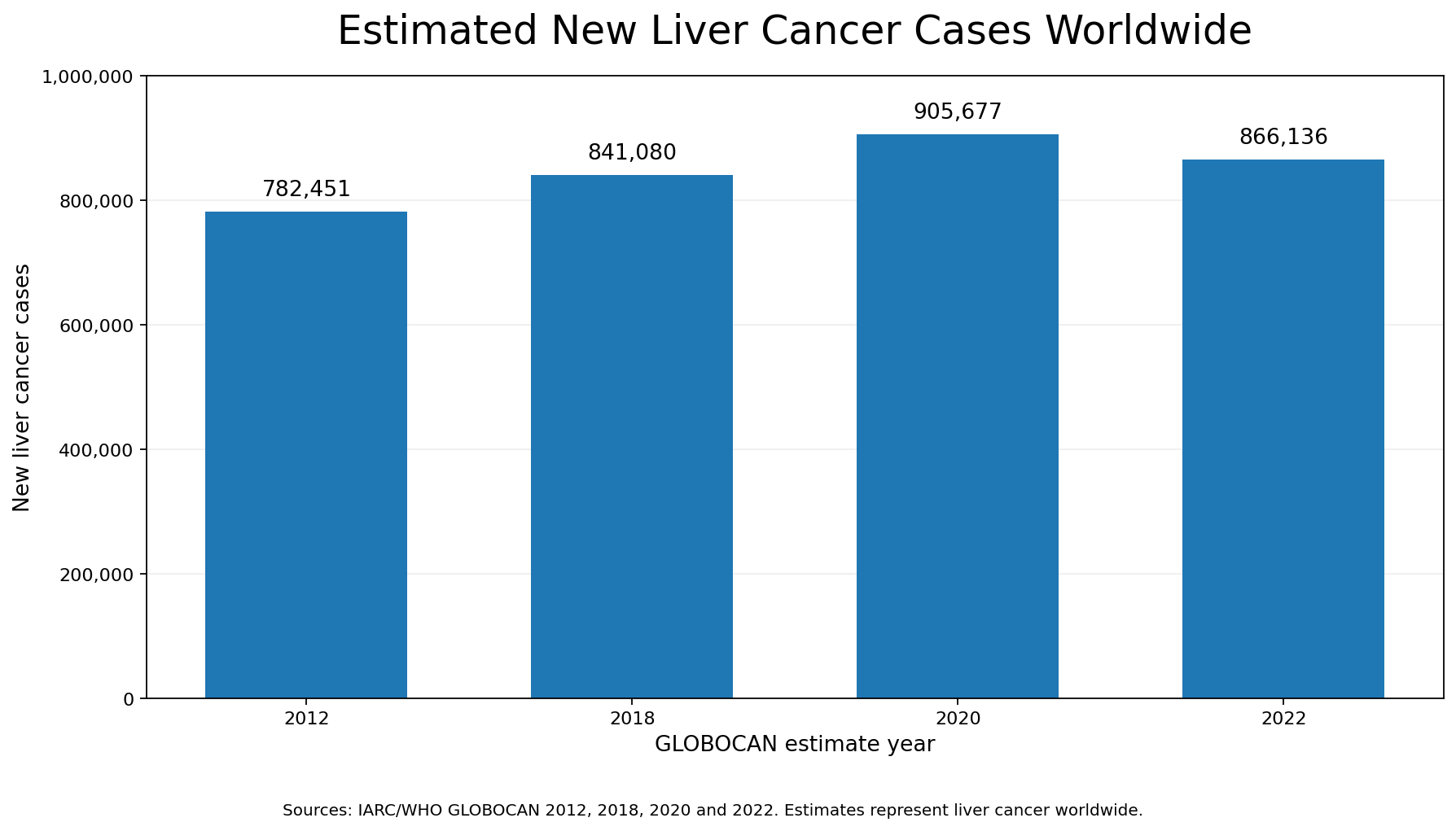
Estimated New Liver Cancer Cases Worldwide

iver cancer remains a major global health burden. GLOBOCAN estimated approximately 866,000 new cases worldwide in 2022. Hepatocellular carcinoma (HCC) is the predominant form of primary liver cancer, and outcomes are strongly influenced by the stage at which the cancer is detected.

Source: WHO Global Cancer Observatory (GLOBOCAN), NCI SEER Program 2023
The trajectory is clear: liver cancer is rising steadily. Early detection via blood-based screening is the only scalable intervention that can reverse the mortality curve without requiring massive infrastructure investment.

OUR PHLEBOTOMY PARTNERS

Trusted Partners for Convenient Blood Collection

MoleculeDx works with established mobile phlebotomy providers to make blood collection convenient for patients across our service area.

P

Portamedic

Provides mobile phlebotomy services, allowing patients to have blood collected conveniently at home.

T

Travalab

Provides mobile phlebotomy services for convenient in-home blood collection and specimen handling.

Your Liver Health Can't Wait.

Take a proactive step toward liver cancer detection. Order your test online and schedule convenient in-home blood collection.

Latest Insights

From the MoleculeDx Journal

Beyond AFP: The Next Generation of Liver Cancer Blood Testing
27Aug

Beyond AFP: The Next Generation of…

Blog Beyond AFP: The Next Generation of Liver Cancer Blood Testing Hepatocellular…

At-Home Blood Draw for Cancer Screening Guide
10Jul

At-Home Blood Draw for Cancer Screening…

Blog At-Home Blood Draw for Cancer Screening: A Simple Guide to Convenient…

What Is HCC Liver Cancer? Screening Guidelines &Early Detection
09Jul

What Is HCC Liver Cancer? Screening…

Blog What Is HCC Liver Cancer? Screening Guidelines & Early Detection What…

Have Questions in your Mind?

General FAQ

MoleculeDx is a molecular diagnostics company developing blood-based tests for cancer detection. Our current focus is hepatocellular carcinoma (HCC), using cancer-associated fusion-transcript signals in serum and proprietary predictive models. Our goal is to extend this molecular diagnostic approach to additional cancers over time.

MoleculeDx develops blood-based cancer tests using cancer-associated fusion transcripts as molecular biomarkers. Our proprietary Fusion-detect™ technology combines multiple molecular signals with predictive models to improve cancer detection. For our current liver cancer test, this approach is designed to detect hepatocellular carcinoma from a blood sample while providing convenient access to sample collection.

MoleculeDx serves patients and healthcare providers seeking accessible blood-based cancer testing. Our current Liver Cancer Fusion Predictor is intended for individuals who may benefit from evaluation for hepatocellular carcinoma (HCC), including people with risk factors for liver cancer. Healthcare providers may also use MoleculeDx testing as part of patient evaluation and follow-up.

Yes. The Liver Cancer Fusion Predictor has undergone clinical validation using samples with established reference diagnoses. Its performance has been evaluated for detection of hepatocellular carcinoma (HCC), including sensitivity and specificity. Testing is performed by MoleculeDx, a CLIA-certified and COLA-accredited laboratory. Clinical validation does not mean that the test is FDA approved or cleared.

A separate prescription from your personal physician is not required to begin the ordering process. Patients may order the Liver Cancer Fusion Predictor online. When required, an authorized healthcare provider facilitates the laboratory order as part of the testing process. You may also discuss testing with your own healthcare provider.

Order the Liver Cancer Fusion Predictor through the MoleculeDx online ordering system. After completing the required information, you can arrange convenient in-home blood collection by a qualified phlebotomy professional. Your sample is then transported to the MoleculeDx laboratory for analysis.

MoleculeDx offers convenient in-home blood collection through contracted mobile phlebotomy providers, including Portamedic and Travalab. A qualified phlebotomy professional collects the required blood sample and arranges for the sample to be transported to the MoleculeDx laboratory for testing.

Results are typically available within 24 hours after the MoleculeDx laboratory receives an acceptable blood sample. Turnaround time may vary if a sample requires additional review or does not meet laboratory acceptance criteria.

You will be notified electronically when your results are available. Your laboratory report can be accessed securely through the patient portal. Results that warrant further evaluation should be discussed with an appropriate healthcare provider.

Yes. MoleculeDx protects patient health information in accordance with applicable privacy and security requirements. Access to personal and medical information is limited to authorized individuals and service providers as necessary to support testing, reporting, and related services.

MoleculeDx testing is currently available in the United States. In-home blood collection is available through our contracted mobile phlebotomy providers, subject to service availability at the patient’s location. Samples are analyzed at the MoleculeDx laboratory.